
December 10, 2008

Nobel Prize Gives Credit Where It’s Due…sort of

HIV has always sparked controversy – all the way back to when it was first discovered. Françoise Barré-Sinoussi and Luc A. Montagnier were recently awarded this year’s Nobel prize for their role in the discovery of the virus. More than two decades ago they identified a virus they named LAV, which later became known as HIV.

Nobelprize But who discovered the virus first would be disputed for many years after. A year after the French team’s discovery, Dr Robert Gallo, who was working in the States, discovered a virus he called HTLV-3 that would turn out to be the same virus. It eventually became clear the specimen the new discovery was taken from had come from the French team’s lab.

So it isn’t really disputable who discovered it first (though they gave it their best shot), but at that early stage Gallo’s research and the methods developed at his lab were instrumental in discovering HIV and propelling understanding of the virus forward. The Karolinska Institute were quoted by the New York Times saying, “Never before has science and medicine been so quick to discover, identify the origin and provide treatment for a new disease entity.”

So I say we take this moment to thank all the scientists involved in that remarkable achievement. Their effort made developing the tests, drugs and monitoring assays that now save millions of lives possible. Beyond the controversy of who deserves what that always comes with these awards, that’s all that really matters – advancing medicine and improving human lives. 

November 27, 2008

World AIDS Day 2008 – Economic crisis raises significance of this year’s event

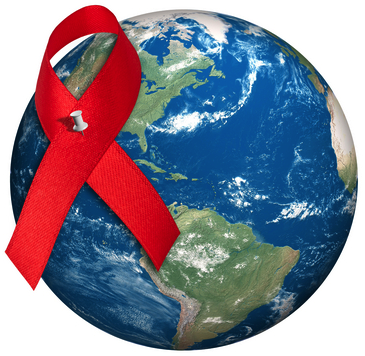
December 1st is World AIDS Day. This year it's more important than ever. It was instituted in 1988 to spread awareness of the severity of the HIV pandemic and how much work needs to be done to stem the tide. Local governments and organisations around the world answered the call and have been doing their part to fulfil the promise of the event each year since. But this year we face a big distraction – the economy.
Red_Ribbon_1183x2126
All around the world, organisations are slashing their budgets and consumers like you and me are looking for ways to cut back. Where will these organisations and individuals look to cut? I guess I’d be naïve not to assume that funding of HIV treatment initiatives would escape their fiscal fitness program.

If you’re in a position to provide assistance or funding to HIV-related programs (and that’s all of us), I’d ask you to consider the cost of cutting back now.

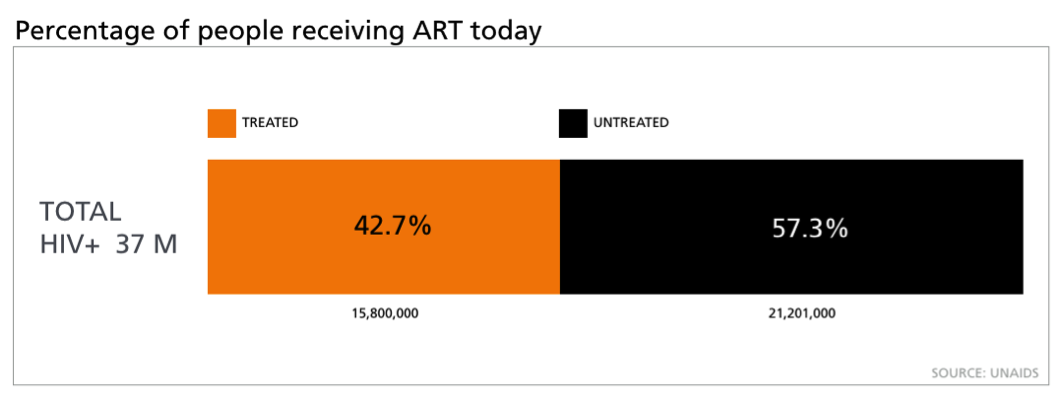
Over the past 20 years, the global HIV community has made astounding advances in battling the pandemic. Back in 1988, the percentage of people receiving treatment who needed it was negligible. Today, millions have access to ARVs, including those in developing countries. Prevention and education campaigns are reaching new audiences all the time. Real strides have also been made in developing the medication and diagnostics required for proper treatment. The investment of time and money since 1988 is paying dividends today in terms of both hampering the spread of the disease and treating those already infected.

Unfortunately, HIV doesn’t slow down during a recession. It is always striving to move forward and will take swift advantage of any weakening of resolve. If treatment is interrupted for those already on ART, their health will be compromised and an increase in drug resistance is certain. If we don’t keep the number of people on treatment rising, AIDS deaths will jump even higher than the millions it already claims annually. And if we don’t keep prevention campaigns going strong, the virus will spread even faster.

This isn’t only a humanitarian concern, but an economic one as well. These negative consequences will result in enormous financial strain on the battle against HIV in the long run. This economic crisis is not just in Africa, but in everyone’s backyard. We need to keep in mind that life will go on during, and after, the recession, and we don’t want to undermine all the work we’ve done up to this point by not looking ahead.

2943876503_58af5504ac

HIV affects everyone and has the potential to be an even greater problem than it already is, on both our health and our economy. So do your part to spread awareness on this World AIDS Day. Here are 5 things you can do to keep the fight against HIV moving in the right direction.

1.    Write a blog post about World AIDS Day, or use other social media to spread the word
2.    Write a letter to the editor or an opinion column for your newspaper
3.    Call or write your local government official and tell them you believe that fighting HIV is still a priority
4.    Get involved in local World AIDS Day events, or create one if nothing is planned in your community
5.    Wear a red ribbon and encourage others to do so

If you have any ideas of your own, please share them in the comments section.

November 25, 2008

The HIV Subtype Picture

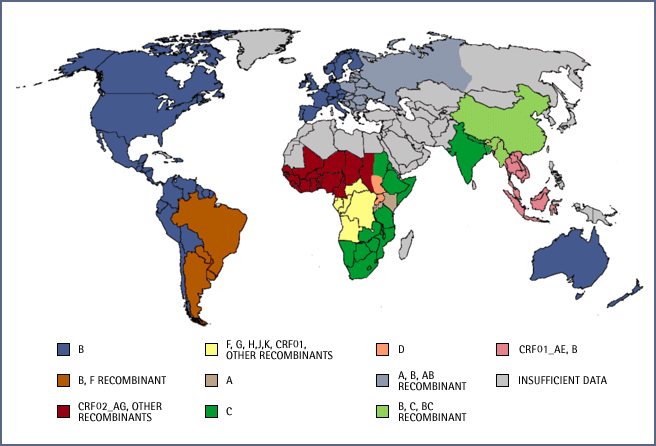
If you live in the West, you might be a little surprised by the subhead on this map. In Western countries, we’re used to it being a given that subtype B is the most prevalent strain of HIV. This map is a great visualization of where the HIV epidemic actually stands in terms of subtype distribution and concentration.

It also makes it clear why there is such a great need for a subtype-independent viral load monitoring assay like our ExaVir Load. It’s not only because the traditional assays were developed for measuring subtype-B and are of limited use outside the Western world, but because the spread of that huge prevalence of other subtypes Westward is only a matter of time.

Picture 1  


As far as our ExaVir Load’s performance goes, that whole map might as well be the same color. But with the diagnostics most prevalently in use today, we’re facing a problem in providing accurate disease monitoring. And the problem will only get bigger as subtypes continue to migrate and mix. 

This is why we’re continually developing diagnostics that are subtype-independent and why we believe it’s so important. We have every opportunity to be ready for when the need for such diagnostics can no longer be ignored, so let’s stay a step ahead this time. 

November 05, 2008

What Sudden Spikes in HIV Viral Load Really Mean

The following was written by Professor John Mills, Monash University, Australia, who I have had the pleasure to work with for a number of years. John is an authority in the HIV field, having extensive experience both in research and in practice, including measuring viral load with our ExaVir Load assay. I’m posting this piece because it does a great job of explaining what HIV viral load blips are, when you should be worried and when it’s a false alarm.

An elevated HIV viral load on therapy: is it a "blip" or a "bust"?

 Although measurements of HIV viral load are useful for assessing the prognosis and need for treatment of patients not on anti-retroviral therapy (ART), they are absolutely critical for monitoring the efficacy of therapy. 

When treatment naïve patients are started on combination ART, the HIV viral load should fall very quickly. Usually within 2-3 months, and certainly by 3-6 months, the viral load should be "undetectable". 

Hiv-research~s600x600What constitutes an "undetectable" viral load depends on the assay system used. It varies from less than 400 copies/ml to less than 40 copies/ml. Although it might seem that <40 is better than <400, to date the evidence suggests they are equivalent. Clearly, however, viral loads at or above 400 are a real cause for worry (Pilcher et al, 1999). 

Once a patient on ART achieves an "undetectable" viral load, it should remain undetectable indefinitely if they continue to take their ART as directed, and do not develop an unusual circumstance that would interfere with drug efficacy (e.g. drug interactions or a gastrointestinal condition interfering with drug absorption or metabolism). 

Surprisingly, a number of studies, including ones in which viral loads were measured daily (Nettles et al, 2005) – as well as substantial clinical experience – have shown that many patients will have transient elevations of viral load known as "blips." Blips are defined as transient, low-level increases in viral load. Specifically, they are a single detectable HIV viral load measurement of less than 1000 (although rare blips may be slightly higher than that), which is immediately preceded and followed by an undetectable viral load (Gallant 2007).

Argument continues as to whether blips are a laboratory artifact or represent true HIV viremia. I think the weight of evidence is that they do represent short-term viremia. 

In an individual patient, the frequency of blips seem to be related to less than perfect adherence to the treatment regimen – patients who have missed ART doses in the week prior to the blip are more likely to have them than patients who are highly adherent (Podsadecki et al, 2007). Curiously, however, blips do not seem to predict subsequent development of an HIV strain resistant to ART ("virologic failure" of the ART regimen). 

How can you tell if a patient who previously has had an undetectable viral load has just a "blip", or whether it is a "bust" – an elevated viral load likely indicating that the ART regimen is failing (due to resistance, poor adherence, poor absorption or drug interactions)? 

If the renegade viral load is well above 1000, it is almost certainly a "bust." But the only way to definitively answer the "Blip or Bust" question is to perform another viral load assay, ideally 3-8 weeks later than the first. Even if the first value is well above 1000, it could still represent a lab error and should be repeated (you wouldn't want to switch a patient to a second line regimen on the basis of an erroneous viral load!). 

If the first viral load value is >1000, and the second value is also >1000, and especially if it is higher than the first, it is almost certainly a "bust", and the patient should be investigated for ART regimen failure. 

If the first value is <1000, and the second value is back to undetectable, you can relax as you're seeing a blip.  However, since blips are related to episodic lapses of adherence, it is definitely worth reminding the patient that the best results from ART are achieved if 100% of doses are taken. 


References

Gallant JE (2007).  Making sense of blips.  J Infect Dis, 196:1729-31

Nettles RE, Kieffer TL, Kwon P, et al. (2005). Intermittent HIV-1 viremia (blips) and drug resistance in patients receiving HAART.  JAMA 293: 817-829.

Pilcher CD, Miller WC, Beatty ZA, Eron JJ. (1999).  Detectable HIV-1 RNA at levels below auntifiable limits by Amplicor HIV Monitor is associated with virologic relapse on antiretroviral therapy.  AIDS 13:1337-42.

Podsadecki TJ, Vrijens BC, Tousset EP et al. (2007). Decreased adherence to antiretroviral therapy observed prior to transient human immunodeficiency virus type 1 viremia.  J Infect Dis 196:1773-8. 

October 16, 2008

The Answers to Your HIV Viral Load Questions

3d-hiv-model The people at The Body have put together this pretty comprehensive resource of information about HIV viral load and what it means to patients. They do a good job of addressing the questions that patients may be worried or confused about, like sudden spikes in viral load and signs of drug resistance. The Body is a great HIV info resource in general, not a bad page to keep in your bookmarks.

October 07, 2008

A Viral Load Monitoring Success Story from Zambia

Hasselt I’ve heard a lot of great stories about how viral load monitoring has helped doctors in resource-limited settings. One in particular always jumps to mind. A Dutch physician named Dr. Piet van Hasselt was working at the Kara Clinic in Lusaka, Zambia when he decided to give viral load testing a try to see if it made a significant difference in his treatment practice.

Up until that point, he only had access to CD4 tests. For his trial, he tested 40 patients with low CD4 counts. He intended to switch them to second-line therapy, assuming their treatment was no longer effective. The viral load tests showed that 60% of them had undetectable viral loads, and as such could remain on first-line treatment.

This gave the patients more time on effective therapy and kept more treatment options open in the future. It also saved the clinic a lot of money as second-line therapy is many times more expensive than first line – money which could then be used to provide more patients with treatment.

These are the kinds of results I believe all clinics should be entitled to and why I push for universal accessibility to viral load monitoring. When you look at stories like this, the medical and financial implications of universal accessibility are staggering.

September 25, 2008

Jan-Olof Morfeldt in Memoriam

Nola_portratt It is with great sadness that I learned of the recent death of Jan Olof Morfeldt. Jan Olof, an HIV doctor, started Noaks Ark (Noah's Ark) back in 1985 along with a number of colleagues. The organization has been an outstanding combatant in the fight to try and stop the spread of HIV in Sweden and continues to provide much needed assistance to those already infected.

Jan Olof was passionate, compassionate and an inspiration. His enthusiasm and great sense of humor will be sorely missed. Our thoughts are with his family, friends, colleagues at Noaks Ark and the many that he has brought help and hope to throughout the years.

Photo: Elisabeth Ohlson Wallin

September 24, 2008

Watch How HIV Works

Do you know what Reverse Transcriptase (RT) is? For one thing, measuring it is what makes our ExaVir HIV viral load test unique. But unless you have a medical background, it’s hard to get your head around RT. That’s why I’m so happy someone sent me this YouTube video. It’s a bit thick on technical-speak but the animation is fantastic and the role of RT very well depicted.


RT is the perfect marker for measuring HIV viral load because a retrovirus, like HIV, requires a functional RT in order to be infectious. This means that by measuring RT activity we can accurately measure viral load regardless of subtype. If you have any other videos related to RT or HIV viral load please let me know.

September 17, 2008

Global Triage - Food First or HIV First?

Rice The global rise in food prices is triggering a crisis in many poorer countries. In many donor circles this has raised the question of whether money earmarked for HIV treatment and prevention should now be diverted to address food shortages as part of our HIV programs as Dr. Ramon Soto suggested at AIDS 2008.  It's got me wondering where the boundary between HIV treatment and general health and welfare issues lies.

Should it be the responsibility of organizations working against HIV to devote their funding, which doesn’t reach far enough as it is, to try and solve other societal issues they encounter in the fight against HIV? Or should it be the responsibility of other relief organizations or the local governments themselves?

In the parts of the world suffering most from HIV, organizations are already struggling to provide universal access to ARVs, viral load and CD4 monitoring as well as prevention. The money is never enough to help everyone as it is. Spreading those funds even further to include food support could undermine the progress made thus far.

 On the other hand, the food crisis is fundamentally undermining the effect of those people who do receive HIV treatment. Rising food prices are not only affecting the health of people living with HIV, it is changing the priorities and behavior of people in general. More and more individuals living with HIV are going to have to decide between buying medicine or buying food. The ones who do buy medicine at the expense of their nutrition won’t be getting the full benefit of treatment anyway since their immune systems will already be so weak.

For me, this is a real chicken and egg situation. Both sides of the argument have ugly downsides. So any solution will be the lesser of two evils I suppose. It’s determining which is the lesser that has me stumped. What do you think?

September 05, 2008

THE DONOR DILEMMA

Millions of lives have been saved thanks to the generous donations of people and organizations around the world to fight HIV. Their efforts are making a difference in the war on HIV and AIDS.  Sadly, according to a recent report by the Center for Global Development, (CGD) many of these well-intentioned organizations are inadvertently undermining the very healthcare systems they are trying to aid.

The study focused on HIV initiatives in Mozambique, Uganda and Zambia. It reveals that in those three countries, because of the process requirements that come with the money; the programs initiated by major donors create a burden on already shaky healthcare infrastructures.

Imagen_002__2__Morguefile By specifying how the treatment is to be administered, the fund provider creates a treatment process for HIV that is separate from the rest of the healthcare system. Having another separate process to learn and run creates new complexity and burdens on already over-burdened systems.

Then there are the staffing issues. Instead of adding new workers for the HIV programs, they usually train existing staff in HIV/AIDS treatment and give them extra money for doing so. Since workers in the AIDS programs get paid more, it draws health and administrative workers away from other (generally already under-staffed) areas.

According to the report all this strengthens the nation’s ability to treat HIV, but weakens its overall ability to treat all other health issues — which are numerous.

I think the report did a good job at documenting the problem, but I was disappointed that it did not investigate or suggest a solution. It would be easy to conclude from the study that perhaps the money should just be handed over to the local health ministry.

The reason many HIV fund providers no longer do that is because they tried that approach and found it didn’t work. Other donors who support a sector approach through ministries get so bogged down with bureaucracy and politics that in many cases nothing happened and if it did, it simply took too long.

Generally, the American donor organizations favor the approach outlined in the report, although many do actually give directly to ministries as well. This results in fast action, but as the report says, can create other obstacles, i.e. sustainability issues and shortage of workforce in other areas.

One thing the CGD paper did not mention is the effort that donors are making to shore up local healthcare infrastructures. I think it’s important to mention that most donors do realize these problems exist and are trying to improve the situation. The World Bank used a whopping 40% of its HIV money for bolstering local infrastructures, and the new PEPFAR plan includes a program to train 140,000 health care workers.

Cohdragive2 Science recently addressed many of these issues in an investigation of how HIV funding is being used titled ‘HIV/AIDS: Follow the Money.’ In the feature, they call for the whole system to be re-thought and point out that many are questioning if all this money for HIV is only made possible by sacrificing treatment for other diseases.

The article also points out that many countries with poor infrastructures miss out on funding because donors realize much of the money will go to waste if they give it to them. The major contributors will not give more money to a country if they feel that country cannot handle it.  In most countries, that maximum capacity doesn’t provide enough money to treat everyone. So simply going around local health infrastructures is clearly not the way to make universal access a reality.

HIV is a long-term problem and clearly the current way of doing things is a short-term solution.  It’s fantastic that these programs have saved so many lives. It’s a shame the only way they can achieve these results is by circumnavigating the health ministries.  The bottom line is that millions are in need right now and they cannot afford to wait for efficient health care systems to develop. But develop they must. 

It is not the donors’ responsibility, but that of the governments who run the health ministries.

My Photo
Blog powered by TypePad

  • Alltop AIDS
  • Bloggers Unite
    Bloggers Unite
  • Google Analytics

    Health Blogs - Blog Catalog Blog Directory

Your email address:


Powered by FeedBlitz